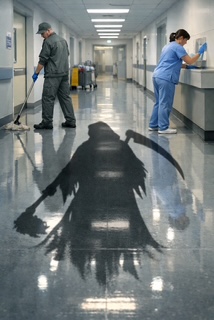
The article criticizes the blind reliance on contemporary disinfectants, claiming that although they are essential for preventing infections, their widespread and excessive use may have unforeseen consequences. According to recent studies, some disinfectants have the potential to alter immunological responses, disturb the gut microbiota, and leave behind chemical residues that are harmful to human and environmental health.
The authors promote a more well-rounded and scientifically supported approach to hygiene, one that successfully protects against viruses without sacrificing long-term biological health. They make comparisons to past medical procedures that were thought to be harmless but turned out to be harmful.
How Modern Disinfection Became a Ritual of Harm—and How Science Is Beginning to Whisper the Truth
By Martin Johns MD and Stanford Silverman
I. The Comforting Lie of Sterility
Every era creates its own rituals of protection.
We burn incense. We wear masks. We wash with sacred waters.
And in modern medicine, we disinfect.
Walk into any hospital, clinic, school, airplane cabin, or home, and you will encounter the same reassuring scent: bleach, quaternary ammoniums, and industrial disinfectants. Their presence signals safety. Control. Cleanliness. Protection.
Or so we believe.
Yet history teaches us that some of humanity’s most trusted “protections” later revealed themselves to be quiet agents of harm. Bloodletting. Mercury tonics. Radium water. Doctor-endorsed cigarettes. Thalidomide. Each arrived wrapped in the authority of science and the promise of protection.
Each eventually revealed a darker truth.
Today we stand at the edge of another such realization.
Emerging research suggests that many of the disinfectants used daily across hospitals, homes, and industries may be exerting subtle but profound biological effects—on microbiomes, immune systems, respiratory tissues, and environmental ecosystems. The very agents we trust to protect us from disease may be altering the internal and external environments that sustain health itself.
The devil’s deed, as always, is done quietly.
And often in the name of safety.
II. When Protection Becomes Exposure
Modern disinfectants—particularly quaternary ammonium compounds and chlorine-based bleaches—are ubiquitous. They are used in healthcare facilities, food production, agriculture, public transportation, and domestic cleaning. Their reach is total.
Yet widespread exposure carries biological consequences.
Recent microbiological research examining disinfectant exposure in animal models demonstrates that prolonged exposure can significantly disrupt gut microbiota composition and immune function. In controlled studies, disinfectants altered microbial balance, damaged mucosal integrity, and downregulated key immune regulatory pathways within the gut.
These findings are not trivial. The gut microbiome is not merely a digestive accessory; it is a central regulator of immune function, inflammation, metabolic stability, and systemic resilience.
Disturbances in microbial balance are linked to inflammatory bowel disease, metabolic disorders, cardiovascular disease, and immune dysregulation.
In experimental models, disinfectant exposure:
The implication is unsettling but scientifically grounded:
chronic exposure to certain disinfectants may alter immune competence rather than simply protect it.
Protection and impairment may be occurring simultaneously.
III. The Microbiome: Humanity’s Forgotten Organ
For most of medical history, the human body was viewed as a solitary organism—self-contained and self-regulated. Only recently has science acknowledged that we are ecosystems: trillions of microbial organisms coexisting in symbiotic partnership with our own cells.
This microbiome regulates immune development, inflammatory signaling, nutrient absorption, and even neurological and emotional balance.
Disrupt it, and systemic consequences follow.
Antibiotics have long been known to alter microbial composition. Now, disinfectants appear capable of doing the same through environmental and contact exposure.
In animal models, disinfectant exposure shifted microbial populations toward opportunistic and less beneficial organisms while reducing beneficial symbiotic species essential to immune stability.
At the molecular level, key immune regulators—including inflammasome-related pathways and cytokine signaling—were suppressed following disinfectant exposure.
The result: a compromised immune environment that may increase susceptibility to inflammatory and infectious disease.
Thus, a paradox emerges.
We disinfect surfaces to eliminate pathogens.
But in doing so, we may be altering the biological terrain that enables our bodies to resist disease in the first place.
IV. Residue: The Invisible Exposure
Modern disinfectants do not simply vanish after use. Many leave residues—microscopic films that persist on surfaces, fabrics, and skin.
In healthcare settings, these residues accumulate across high-touch surfaces: bed rails, floors, incubators, and equipment. Infants in neonatal intensive care units, patients recovering from surgery, and healthcare workers themselves are exposed repeatedly to these chemical films.
Dermal absorption, inhalation of aerosolized particles, and ingestion through hand-to-mouth transfer represent ongoing pathways of exposure.
Scientific literature increasingly recognizes that disinfectant residues can:
The notion that a disinfected surface remains biologically inert is therefore incomplete.
In many cases, the surface becomes chemically active.
Cleanliness, in such contexts, may be a visual illusion masking biochemical complexity.
V. The Respiratory and Environmental Dimension
Beyond microbiome disruption, disinfectant exposure has been associated in various studies with respiratory irritation, occupational asthma, and mucosal inflammation—particularly among healthcare and environmental service workers.
These exposures occur not episodically but daily, often for decades.
At the environmental level, disinfectants entering wastewater systems can alter aquatic microbial ecosystems and contribute to antimicrobial resistance.
Soil and water contamination from widespread disinfectant use represent an emerging ecological concern with potential long-term consequences for human and planetary health.
Thus the cycle becomes self-reinforcing:
The ritual intensifies even as its consequences accumulate.
VI. Lessons from History’s Medical Misjudgments
History offers sobering parallels.
For centuries, physicians prescribed mercury to treat syphilis, believing its toxicity would purge disease. Patients developed neurological damage, organ failure, and death—symptoms interpreted at the time as evidence that the treatment was “working.”
Cigarettes were once marketed as physician-endorsed respiratory aids. Radium was sold as a vitality tonic. Heroin was introduced as a non-addictive cough suppressant. Each innovation carried scientific credibility until evidence accumulated to the contrary.
These misjudgments share a common pattern:
Modern disinfectant reliance may follow a similar trajectory—not as an act of malice, but as an unintended consequence of incomplete understanding.
VII. The Immunological Paradox
Human immune systems evolved in dynamic interaction with microbial environments. Controlled exposure to microbes helps train immune responses, regulate inflammation, and maintain tolerance.
Excessive sterilization of environments—particularly when combined with microbiome-altering chemical exposure—may contribute to immune dysregulation rather than resilience.
The “hygiene hypothesis” has long suggested that overly sterile environments can increase susceptibility to allergic and autoimmune conditions. Modern disinfectant chemistry introduces a new dimension: not merely absence of microbes, but active alteration of microbial and immune signaling pathways.
If disinfectants simultaneously:
then their net impact on health becomes complex rather than uniformly protective.
This does not argue for abandonment of hygiene.
It argues for refinement of hygiene.
VIII. Toward a More Intelligent Chemistry
The future of infection control will not lie in abandoning disinfection, but in developing approaches aligned with biological systems rather than antagonistic to them.
Chemistries based on acetic acid, hydrogen peroxide derivatives, and rapidly degrading organic compounds represent areas of ongoing exploration. Such approaches aim to achieve microbial control while minimizing persistent residues and ecological disruption.
A balanced framework would consider:
In short, disinfection must evolve from blunt chemical force to biologically informed precision.
IX. The Ethical Imperative
Every generation inherits practices assumed to be safe. Some prove beneficial. Others reveal unforeseen consequences only after decades of use.
The ethical responsibility of modern medicine and industry is not to defend existing practices reflexively, but to examine them rigorously.
Emerging research does not yet provide all answers. But it raises essential questions:
Scientific progress begins with such questions.
X. A Moment of Choice
We stand at a threshold familiar to historians of medicine:
the moment when widely accepted practices begin to reveal deeper complexity.
Disinfectants have saved lives. They remain essential tools in infection control. Yet the emerging evidence suggests that indiscriminate or excessive use may carry unintended biological costs.
The goal is not alarm, but awareness.
Not abandonment, but evolution.
A future in which hygiene supports rather than undermines human biology is entirely possible—but only if science, medicine, and industry are willing to examine longstanding assumptions with humility and rigor.
The devil’s deed, if it exists, is rarely intentional.
It emerges from certainty unexamined.
And the first step toward correction is always the same:
To bring what has been done in darkness into the light.
Footnotes
Disclaimer: This article discusses certain companies and their products or services as potential solutions. These mentions are for illustrative purposes only and should not be interpreted as endorsements or investment recommendations. All investment strategies carry inherent risks, and it is imperative that readers conduct their own independent research and seek advice from qualified investment professionals tailored to their specific financial circumstances before making any investment decisions.
The content provided here does not constitute personalized investment advice. Decisions to invest or engage with any securities or financial products mentioned in this article should only be made after consulting with a qualified financial advisor, considering your investment objectives and risk tolerance. The author assumes no responsibility for any financial losses or other consequences resulting directly or indirectly from the use of the content of this article.
As with any financial decision, thorough investigation and caution are advised before making investment decisions.
How Reimbursement Architecture Shapes What Scales in American Medicine — and Why Regenerative Innovation Must Integrate, Not Bypass, the System By Martin Johns MD, Gregory...
 Martin C. Johns MD
Reclaiming the American Economic Covenant – and the Financial Policy Council’s Mandate for Policy Accountability By Paul Mourino (Board Member, Financial Policy Council) Introduction: Davos,...
 Paul Mourino
Two islands, one equation: constrained inputs, constrained outputs Islands operate like closed-loop organisms. In medicine, when an organ’s clearance system fails—when the lymphatics don’t drain,...
 Stanford Silverman
We Extend Our Gratitude to Our Partners